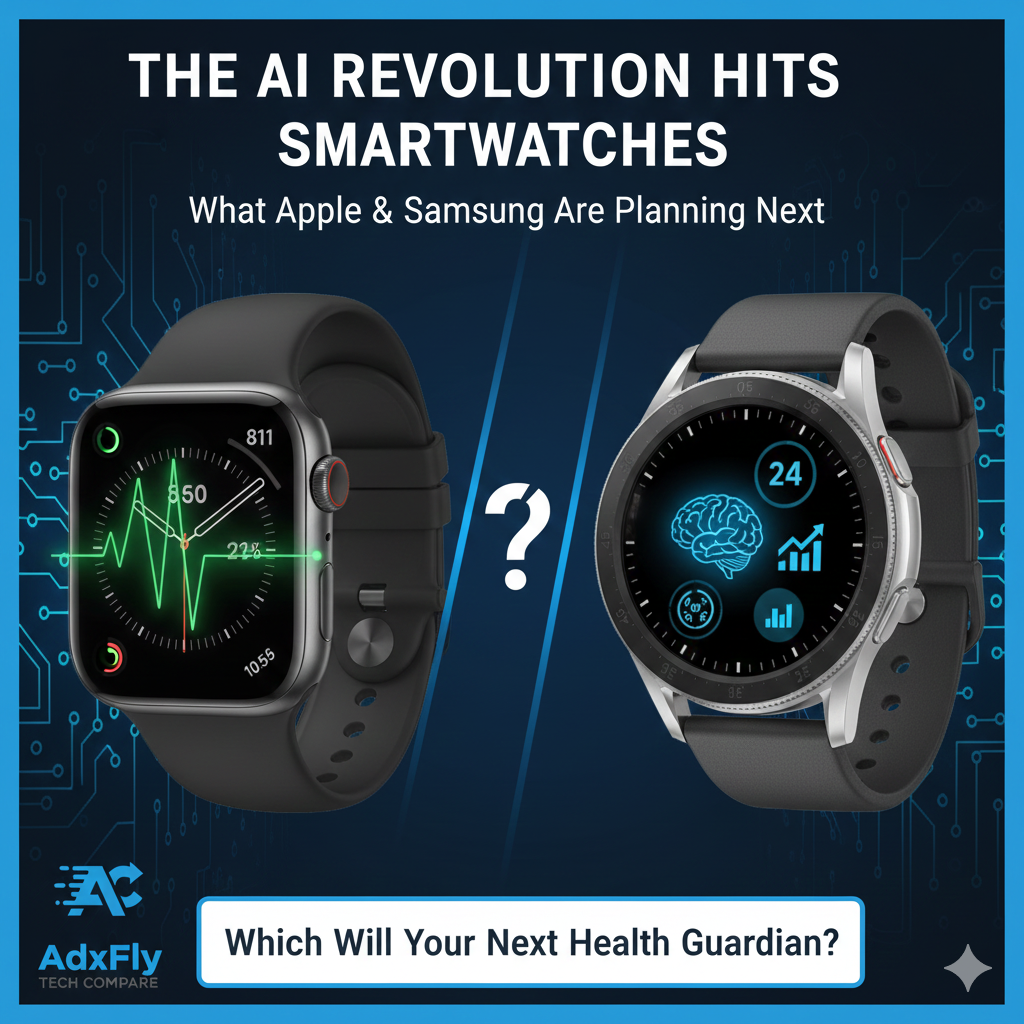
Introduction: Smartwatches Get Smarter
The wearable technology market is on the brink of its next major transformation. For years, smartwatches have focused on fitness tracking and notifications. Now, the battleground has shifted to Artificial Intelligence (AI) and advanced health monitoring. Both industry giants, Apple and Samsung, are gearing up to integrate deep AI capabilities into their upcoming flagship wearables, promising a future where your watch does more than just tell time—it actively manages your well-being.
🧠 Samsung’s AI Health Push: Galaxy Watch 8
Samsung is focusing heavily on making its Galaxy Watch 8 (expected) a true personalized health coach, powered by its new [Example AI Model Name] AI platform.
Enhanced Sleep and Fatigue Analysis (H3)
Leaks suggest Samsung is improving its sleep tracking accuracy using AI to analyze micro-movements and environmental data (like temperature and light). However, the real breakthrough is expected in fatigue scoring.
- Prediction: The watch will reportedly use AI to predict when the user is likely to experience performance dips or burnout, suggesting optimized rest times or light exercise.
Personalized Fitness Coaching (H3)
Instead of generic workout plans, the AI will learn the user’s metabolic rate and recovery patterns. If you miss a workout, the AI won’t just scold you—it will adjust your next two days of activity based on current readiness scores.
“Samsung is aiming to move beyond simple data reporting toward actionable, predictive health insights directly on the wrist.” – Tech Analyst Report
🍏 Apple’s Focus on Precision Diagnostics: Watch Series 11
While Samsung focuses on daily coaching, industry rumors point to Apple using AI in the Apple Watch Series 11 (expected) to achieve medical-grade precision in diagnostics.
Non-Invasive Glucose Monitoring (H3)
The long-rumored, game-changing feature: non-invasive blood glucose monitoring. While still challenging, AI modeling and advanced spectral sensors are key to making this possible.
- The AI Role: The AI will analyze sensor readings against environmental variables, compensating for external factors (like sweat or temperature) to give accurate, real-time blood glucose estimates without drawing blood. This would be revolutionary for diabetic users.
Mental Health and Stress Modeling (H3)
Apple is also expected to deepen its mental wellness tracking. The Series 11 might use AI to analyze vocal tone during calls (with user permission), typing speed, and heart rate variability to identify chronic stress or anxiety spikes, offering instant, guided breathing exercises.
🔄 The AI Wearables Showdown: What It Means for Consumers
This AI integration marks the end of the “basic smartwatch” era.
| Feature Area | Samsung Strategy | Apple Strategy |
| Primary Goal | Personalized Coaching & Predictive Fitness | Precision Diagnostics & Health Security |
| AI Focus | Daily behavioral adjustments and fatigue management. | High-accuracy medical measurements (e.g., glucose). |
| User Benefit | Easier attainment of fitness goals and better energy management. | Earlier detection of potential health issues. |
The move towards AI means smartwatches will soon function less like external trackers and more like proactive, always-on health assistants. This competition is great news for consumers, driving innovation in battery life and sensor technology to handle the demanding AI workloads.